




In today’s audio-first world, headphones are more than accessories—they’re an extension of personal style, productivity, and escape. But with thousands of models flooding the market, choosing the right pair can be overwhelming. Whether you’re a gamer, a frequent traveler, a music lover, or just someone who appreciates good sound, understanding the nuances of over-ear, in-ear, and wireless headphones is essential. This guide delivers expert buying tips for over-ear, in-ear & wireless headphones, helping you avoid common pitfalls and make a sound investment.
Over-Ear Headphones: Immersive Listening for Audio Purists
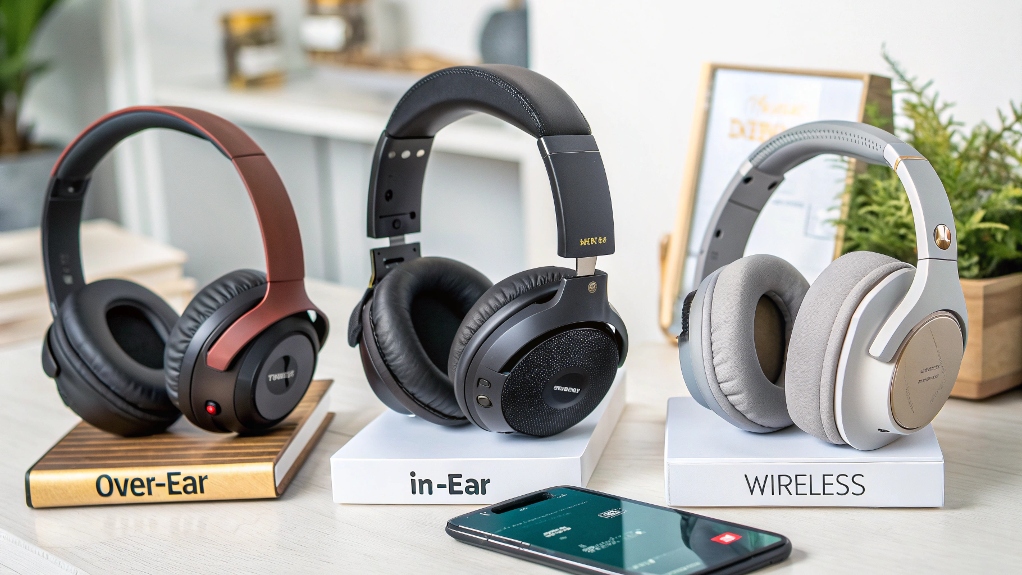
Over-ear headphones are often considered the gold standard for immersive sound quality. Their large drivers, usually 40mm or more, allow for deeper bass and clearer highs. A 2023 market report by Grand View Research revealed that over-ear headphones dominate 35% of the global headphone revenue due to their premium sound capabilities.
When choosing over-ear models, look at:
- Driver Size & Type: Bigger isn’t always better, but larger drivers usually mean richer sound.
- Open-back vs. Closed-back: Open-back designs provide natural sound but leak audio. Closed-back offers better isolation, ideal for commuting or office use.
- Comfort & Materials: Opt for memory foam cushions and adjustable headbands. Weight distribution matters for long wear.
Pro Tip: Audiophiles rave about the Sennheiser HD660S for its detailed soundstage and balanced tone. Meanwhile, the Sony WH-1000XM5 offers industry-leading noise cancellation, perfect for travel.
In-Ear Headphones: Compact, Convenient, But Choose Wisely
In-ear headphones, or earbuds, are favored for portability and discretion. But not all earbuds are equal. According to Statista, wireless in-ear headphone sales in the U.S. surged past $7 billion in 2023, largely driven by mobile-first users.
Key factors to consider:
- Fit & Comfort: Poorly fitting earbuds fall out or cause ear fatigue. Look for models with multiple ear tip sizes.
- Sound Isolation: Passive noise isolation comes from a snug fit. Active Noise Cancellation (ANC) is a bonus.
- Battery Life: Most true wireless earbuds offer 4–8 hours per charge. Cases typically add 20–30 more hours.
Expert Insight: Apple AirPods Pro 2 dominate for iOS users thanks to seamless integration and strong ANC. Android users often lean toward the Samsung Galaxy Buds2 Pro or Sony WF-1000XM5 for superior codec support.
Wireless Headphones: Freedom with Trade-Offs
Wireless headphones—both over-ear and in-ear—offer unmatched freedom of movement. But they do come with trade-offs, such as latency and battery limitations.
When buying wireless models, consider:
- Bluetooth Version: Go for Bluetooth 5.0 or later for better range and stability.
- Codec Support: AAC, aptX, and LDAC offer better sound quality. SBC is common but less efficient.
- Latency & Multipoint Connectivity: Gamers and multitaskers should ensure low-latency performance and the ability to connect to multiple devices.
A 2024 Consumer Reports survey found that battery life and comfort ranked higher than price for wireless headphone buyers. This indicates that real-world usability often outweighs technical specs.
Noise Cancellation: Worth the Price?
Active Noise Cancellation (ANC) technology is one of the most in-demand features today. It uses microphones to detect and cancel external noise.
But here’s the catch: Not all ANC is equal. Bose and Sony dominate the ANC landscape, with Bose QuietComfort Ultra and Sony WH-1000XM5 consistently topping review lists on sites like TechRadar.
However, ANC adds to the cost and can affect audio fidelity. If you often use headphones in quiet environments, this feature may be unnecessary.
Build Quality & Durability: Think Long-Term
Looks can be deceiving. A stylish headphone made of low-quality plastic won’t last long under daily wear.
Look for:
- Metal-reinforced headbands in over-ear models.
- IPX Ratings in in-ear headphones (IPX4 or higher for sweat/water resistance).
- Detachable cables or modular parts for easy replacement.
Headphones like the Audio-Technica M50x (wired) or Shure Aonic 50 (wireless) are known for their studio-grade construction.
Budget vs. Performance: Finding the Sweet Spot
The market offers headphones ranging from $20 to over $1,000. But price alone doesn’t determine quality. The key is to balance your needs with value.
For example, the Anker Soundcore Life Q30 delivers ANC and solid audio at under $80, making it a favorite among budget-conscious consumers. Meanwhile, audiophiles might spend upwards of $300 on brands like Beyerdynamic or Focal for unmatched clarity.
A 2024 CNET article emphasizes the importance of not overspending on features you won’t use. Think about your daily use-case: commuting, working out, gaming, or studio work.
Compatibility: Check Before You Buy
Don’t ignore compatibility. Many headphones are optimized for specific platforms.
- Apple devices: Favor earbuds with AAC and seamless pairing (e.g., AirPods Pro).
- Android devices: Prioritize aptX or LDAC support.
- PC or gaming consoles: Ensure low-latency options and mic integration.
Some headphones also require proprietary apps for firmware updates or custom EQ settings, which can limit cross-platform functionality.
Real-World Examples: What Buyers Love
- Commuters swear by Sony WH-1000XM5 for quiet travel experiences.
- Fitness lovers prefer Beats Fit Pro for its snug fit and spatial audio.
- Gamers favor the SteelSeries Arctis Nova Pro Wireless for zero-lag and superior mic clarity.
- Remote workers choose Jabra Elite 85h for call quality and multipoint pairing.
Each of these cases showcases different needs and priorities, proving there’s no one-size-fits-all solution.
Most Asked FAQs
Are over-ear headphones better than in-ear?
Not always. Over-ear offers better sound, but in-ear wins for portability and convenience.
What is the ideal battery life for wireless headphones?
Look for at least 20 hours in over-ear and 5–8 hours in earbuds with charging case support.
Do expensive headphones always sound better?
No. Brand markup and features can inflate prices. Focus on sound profile and reviews.
Which headphones are best for phone calls?
Models with beamforming mics and noise suppression—like Jabra or Bose—perform best.
Can I use wireless headphones for gaming?
Yes, but prioritize low-latency models or consider Bluetooth with aptX Low Latency.
What’s the difference between noise-isolating and noise-canceling?
Isolation is passive (fit-based), while cancellation uses tech to block ambient noise.
Are wired headphones outdated?
Not for audiophiles. Wired headphones still deliver unmatched clarity and zero lag.
Read More Also: Headphone Tips: Improve Sound Quality, Fit, and Longevity
Final Thought: Don’t Just Buy—Buy Smart
Choosing the right headphones is less about chasing specs and more about understanding your lifestyle. Whether you want the full-bodied sound of over-ear cans, the convenience of in-ear buds, or the freedom of wireless listening, there’s a perfect pair for you.
Use these expert buying tips for over-ear, in-ear & wireless headphones to filter out the noise—literally and figuratively. Prioritize fit, sound quality, and real-world use over flashy marketing. Your ears—and your wallet—will thank you.
Discover More: What Is the 7 Gift Rule? A Game-Changer in Thoughtful Gifting