

Managing classroom technology can feel overwhelming. Teachers face the daily challenge of keeping headphones organized, untangled, and ready for student use. A well-organized storage system saves time and reduces frustration for both educators and students.
This guide explores practical storage solutions and cable management strategies. You’ll discover methods that work for different classroom sizes and budgets. These ideas will help create a more efficient learning environment.
Why Headphone Storage Matters in Modern Classrooms
Today’s classrooms rely heavily on technology for learning. Students use headphones for online lessons, educational videos, and testing. However, tangled cords and misplaced headphones waste valuable instructional time.
Proper storage extends the life of your equipment. Headphones that are carelessly thrown into bins break more easily. Additionally, organized storage teaches students responsibility and respect for shared resources.
A dedicated storage system also improves classroom hygiene. Each student can have their own assigned headphone, reducing the spread of germs. This consideration became especially important following recent health concerns.
Wall-Mounted Storage Solutions
Wall-mounted systems maximize floor space in crowded classrooms. These options keep headphones visible and easily accessible for students.
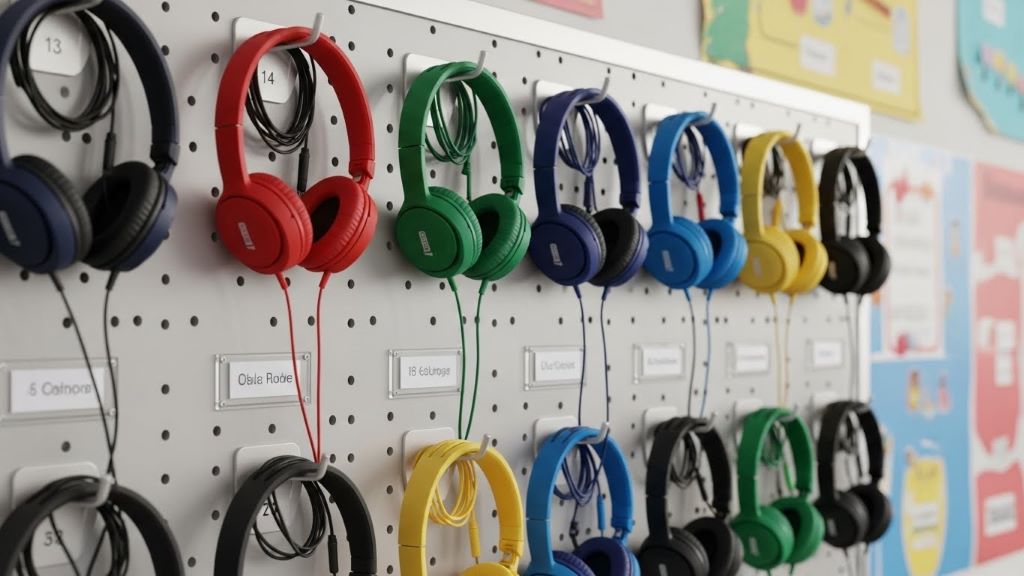
Pegboard systems offer incredible flexibility. You can arrange hooks to accommodate different headphone sizes and styles. Teachers can also add labels or numbers to assign specific spots to individual students. Moreover, pegboards allow you to adjust the configuration as your needs change throughout the year.
Command hooks provide a budget-friendly alternative. These adhesive hooks install without damaging walls, making them ideal for rental classrooms or temporary setups. Space them evenly along a wall to create a simple hanging system. However, ensure you choose hooks rated for the weight of your headphones.
Wall-mounted file organizers work surprisingly well for headphone storage. These metal or plastic racks typically used for papers can hold headphones with wrapped cords. Each slot becomes a designated space for one set of headphones. Therefore, students can quickly grab and return their equipment without confusion.
Individual Storage Containers
Individual containers offer excellent cable management and prevent tangling. These solutions work particularly well for younger students who need extra organization support.
Plastic pencil boxes create perfect headphone homes. Students can store their assigned headphones inside labeled boxes. The cord wraps neatly around the headphones before placing them in the container. This method keeps everything contained and reduces the chance of damage.
Zippered mesh bags provide another practical option. These bags are lightweight and allow air circulation, which helps prevent moisture buildup. Students can see their headphones through the mesh material. Additionally, the bags can hang on hooks or fit into cubby spaces.
Small drawstring pouches offer a soft storage solution. These fabric bags protect headphones from scratches and dust. Choose different colors to help students identify their assigned equipment quickly. The drawstrings keep everything secure when not in use.
Cart and Caddy Systems
Mobile storage solutions bring flexibility to your classroom layout. Carts and caddies allow you to move headphones wherever they’re needed.
Rolling utility carts with multiple shelves accommodate entire class sets. Each shelf can hold several headphones with wrapped cords. Some teachers use small baskets on each shelf to separate individual student sets. Furthermore, the cart can be wheeled to different areas of the classroom or even shared between rooms.
Desktop caddies work well for small group stations. These portable organizers typically feature multiple compartments. Students working at a particular station can access headphones without crossing the classroom. This arrangement minimizes disruptions during independent work time.
Over-the-door shoe organizers repurposed as headphone caddies offer an innovative solution. Hang the organizer on a closet door or room divider. Each pocket holds one set of headphones with the cord wrapped. This vertical storage uses often-wasted space effectively.
Cable Management Techniques
Tangled cables create unnecessary stress and can damage headphone wires. Simple cable management strategies prevent these problems.
Velcro cable ties keep cords neat and tidy. These reusable ties wrap around bundled cables and secure with hook-and-loop fasteners. They come in various colors, which helps with organization. Students can learn to wrap their cords and apply the tie before storing their headphones.
Twist ties or rubber bands provide quick cable solutions. While not as durable as Velcro ties, they cost very little and work in a pinch. However, be cautious with rubber bands as they can deteriorate over time and may damage cord insulation.
The over-under wrapping technique prevents cable twisting. This professional method, used by audio technicians, creates a figure-eight pattern. Teaching older students this technique gives them a valuable skill. Consequently, your headphone cables will last significantly longer.
Cord winders or cable wraps offer another management tool. These small plastic devices have notches where cords wind around. Students simply wrap the cord around the device and tuck the plug into a slot. This method works especially well for younger children who struggle with other wrapping techniques.

Budget-Friendly DIY Storage Ideas
Creative teachers can build effective storage systems with minimal investment. These DIY solutions often work just as well as commercial products.
Repurposed toilet paper tubes become simple cord organizers. Decorate the tubes and stand them in a shoebox or basket. Students wrap their headphone cords and slide them into individual tubes. This craft project can even become a fun classroom activity.
Pool noodles cut into sections create cushioned headphone holders. Slice the noodle lengthwise to create an opening. Headphones rest in the slit, keeping the ear cups protected. Mount several noodle sections on a board for a colorful storage display.
Binder clips attached to the edge of a desk or shelf provide instant hanging space. The metal handles flip up to create hooks for headphone bands. This solution costs almost nothing and utilizes existing furniture. Moreover, binder clips come in various sizes to accommodate different headphone styles.
According to education technology experts at Edutopia, organized classroom technology management significantly improves instructional time and reduces equipment damage.
Color-Coding and Labeling Systems
Visual organization systems help students quickly identify their assigned equipment. These methods reduce confusion and save time during transitions.
Color-coded systems work exceptionally well for younger grades. Assign each student a color and mark their headphones with colored tape or stickers. Storage containers, hooks, or cubbies receive matching colored labels. Students simply match colors to find their equipment.
Number systems provide a straightforward organizational method. Label headphones and storage spaces with corresponding numbers. Create a chart showing which number belongs to each student. This system works well for older elementary through high school students.
Name labels ensure clear ownership of equipment. Use a label maker or permanent marker to add student names to headphone bands. While this method requires relabeling when equipment is reassigned, it eliminates confusion. Additionally, students take better care of items bearing their names.
Maintenance and Hygiene Considerations
Clean, well-maintained headphones last longer and promote student health. Establishing routines for headphone care benefits everyone.
Regular cleaning schedules prevent buildup of dirt and germs. Wipe ear cups weekly with disinfecting wipes approved for electronics. Allow headphones to dry completely before storage. The Centers for Disease Control and Prevention recommends regular cleaning of shared classroom equipment to reduce illness transmission.
Disposable headphone covers offer a hygiene solution for shared equipment. These fabric or foam covers slip over ear cups and can be replaced for each student. While this adds an ongoing cost, it addresses health concerns effectively. However, ensure students understand these covers are single-use to prevent cross-contamination.
Inspection routines help catch problems early. Check cords regularly for fraying or exposed wires. Test audio quality periodically to ensure both ears work properly. Students can learn to report damaged equipment rather than continuing to use faulty headphones.
Conclusion
Effective headphone storage and cable management transform classroom technology use. The right organizational system depends on your space, budget, and student ages. Wall-mounted solutions maximize space while individual containers prevent tangling. Mobile carts offer flexibility, and DIY options provide budget-friendly alternatives.
Implementing these storage ideas creates a more efficient learning environment. Students spend less time searching for equipment and more time engaged in learning activities. Additionally, proper storage extends the life of your headphones, making your technology budget go further.
Start with one storage method that fits your current situation. You can always adjust and add systems as needed. Therefore, choose a solution you can maintain consistently throughout the school year.
Frequently Asked Questions
How many headphones should I have for my classroom?
Ideally, provide one set of headphones per student, plus two or three extras for guests or replacements. This ensures every child has access when needed. Having backup headphones prevents disruptions when equipment breaks or needs repair.
What’s the best way to prevent headphone cords from tangling?
Teach students to wrap cords properly using the over-under technique or Velcro cable ties. Requiring wrapped cords before storage makes a significant difference. Consistency is key, so make cord wrapping part of your classroom routine.
How often should classroom headphones be replaced?
With proper care and storage, quality headphones last two to three years in classroom settings. However, cheaper models may need annual replacement. Regular maintenance and organized storage significantly extend headphone lifespan.
Should students have assigned headphones or share equipment?
Assigned headphones improve hygiene and teach responsibility. Students take better care of equipment they consider “theirs.” However, sharing works if you implement regular cleaning schedules and have sufficient quantities for your class size.
What’s the most affordable headphone storage solution?
Command hooks or binder clips offer the cheapest effective storage options. DIY solutions using repurposed materials like toilet paper tubes or pool noodles cost almost nothing. Start with budget options and upgrade as funding allows.
Related Topics:
Headphone Tips: Improve Sound Quality, Fit, and Longevity